How to Design Branded Packaging That Turns Unboxing Into a Marketing Moment
Unboxing has become a genuine marketing channel. YouTube channels dedicated to product unboxing experiences have hundreds of millions of subscribers. Instagram and TikTok are full of user-generated content featuring aesthetically designed packaging. And research consistently shows that the packaging experience directly affects repeat purchase rates, word-of-mouth referral likelihood, and the perception of product quality, independent of the actual quality of the product inside. For brands that sell physical products, packaging design is no longer a logistics decision. It is a marketing decision with measurable returns.
Key takeaways
- Always position packaging artwork on the dieline so key elements do not fall on folds, cut edges or assembly tabs.
- Choose kraft or recycled materials for natural positioning, knowing they print a more muted palette than white coated stock.
- Prioritize design effort according to the impact of each moment in the unboxing sequence on the overall impression.
The Unboxing Experience as a Brand Touchpoint
The moment a customer opens a package is one of the most emotionally charged interactions they have with a brand. They have waited for the product, anticipated its arrival, and are now in a state of positive expectation that creates unusual receptivity to brand communication. The packaging experience either meets that expectation, or exceeds it in a way that creates genuine delight, or it creates a disappointment that sets the wrong emotional tone for the product use that follows.
Research from the packaging industry consistently documents the impact of this moment. Customers who experience a premium unboxing are significantly more likely to repurchase, significantly more likely to share the experience on social media, and significantly more likely to recommend the brand to others. The multiplier effect of organic social sharing from satisfied unboxing experiences is particularly valuable, a single aesthetically designed package photographed and posted by an engaged customer reaches that customer’s entire social network at zero additional marketing cost.
The Hierarchy of Unboxing Moments
Designing an effective unboxing experience requires understanding the sequence of sensory moments that make up the experience and prioritizing design investment in proportion to each moment’s impact on the overall impression.
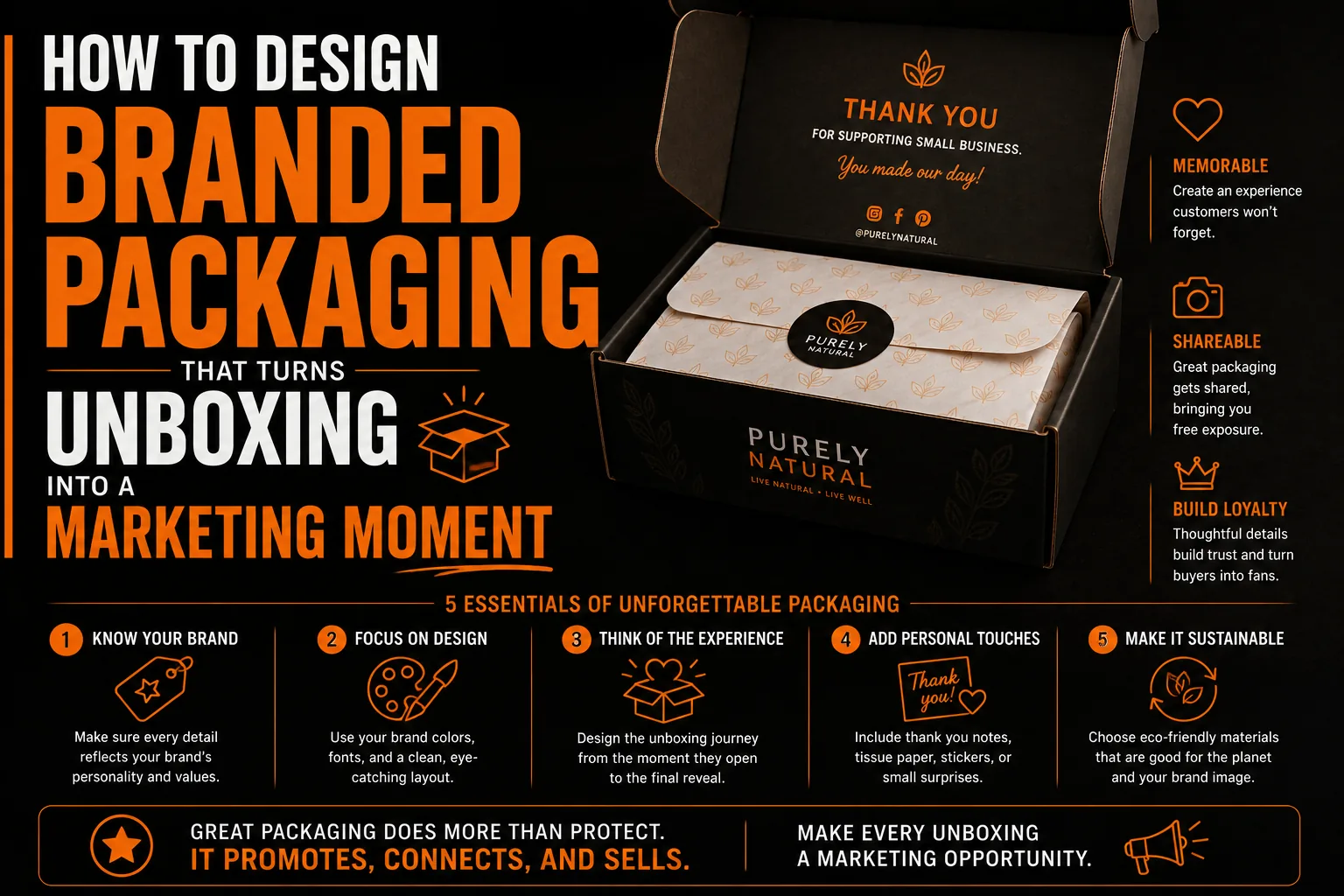
The outer package is the first moment, what the customer sees and photographs before opening. This surface has the highest social sharing potential and the most impact on the first impression of the brand. The exterior design must communicate the brand’s visual identity clearly, use materials and printing techniques that signal the appropriate quality level, and create visual interest that makes the package look distinctive against the plain brown boxes that surround it in every customer’s delivery environment. A branded mailer box in a distinctive color with a clean, confident logo makes an immediate statement before the customer has opened it.
The interior reveal is the second moment, what the customer sees when the package is first opened. This is where tissue paper, custom shredded fill, or interior printed box lining creates either a premium reveal experience or a functional but unimpressive one. Custom tissue paper in a brand color, sealed with a branded sticker, costs very little and dramatically elevates this moment. Interior printed box lining, a pattern, a message, a brand illustration printed on the interior surface of the box, adds surprise and delight that the customer often photographs as a second unboxing image.
The personalized element is the third moment and the highest-impact brand communication in any unboxing experience. A handwritten thank-you note, a personalized card with the customer’s name, or any element that communicates that a human being participated in the preparation of this specific order creates an emotional response that no amount of graphic design can replicate. At scale, a consistent printed card with an authentic-feeling message and a personal signature achieves most of the emotional impact of a truly handwritten note at a fraction of the labor cost.
Material Choices That Communicate Brand Values
The materials used in packaging communicate brand values before the customer reads a single word of brand messaging. Kraft and recycled materials communicate environmental consciousness, authenticity, and natural positioning. They are the preferred material for organic, sustainable, artisan, and wellness brands where alignment with natural values is central to the brand proposition. The limitation of kraft materials is that they constrain color vibrancy, printing on kraft stock produces a more muted palette than printing on white coated stock, which can be either a limitation or an intentional aesthetic choice depending on the brand’s visual identity.
White rigid boxes with gloss or matte printed exterior communicate premium positioning. The white stock allows full-color printing to appear at maximum vibrancy, and the rigidity of the box communicates quality through physical weight and resistance to compression. This is the standard packaging format for luxury goods, beauty products, electronics accessories, and any product where premium positioning justifies the higher cost of rigid box packaging over mailer cartons.
Custom printing on the interior of packaging, whether a pattern, a quote, a brand story, or an illustration, adds a surprise element that photographs beautifully and is almost never expected by the customer receiving a first order. This surprise-and-delight mechanism is one of the most cost-effective per-impression brand investments available in packaging design.
Technical Requirements for Packaging Design Files
Packaging production has specific and unforgiving technical requirements that differ from standard print. Every packaging format, boxes, mailers, sleeves, labels, pouches, has a specific dieline: a template file showing the exact cut, score, and fold lines of the finished package laid flat. All design work must be positioned relative to the dieline to ensure that finished assembled packaging looks as intended. Designing without the dieline consistently produces packaging where critical design elements fall on fold lines, cut edges, or assembly tabs rather than on the visible faces of the finished package.
Obtain the dieline from your packaging printer before beginning any design work. The printer will typically provide a PDF or AI template showing all construction lines on a specific Pantone color, with printing areas clearly indicated. Design on separate layers from the dieline, keeping the dieline visible as a reference until the final file is prepared for submission.
Frequently Asked Questions About Branded Packaging Design
What makes branded packaging worth the extra cost over plain packaging?
Branded packaging generates increased repeat purchase rates, organic social media sharing, word-of-mouth referrals, and reduced return rates. Research found that 40 percent of consumers are likely to make repeat purchases from a brand using premium packaging, and 60 percent share photos of packaging on social media when it is visually distinctive, making packaging a genuine marketing channel with measurable return on investment.
What packaging elements have the highest impact on customer perception?
The highest-impact elements in order are: the outer box or mailer design (first seen and most often photographed), the interior tissue paper or protective material quality (the second sensory moment), any personalized or handwritten element inside (the most emotionally impactful for creating advocacy), and any brand communication insert, a card or note, that extends the brand interaction beyond the product itself.
What file formats does a packaging printer need for the logo and design?
Packaging printers require vector files for all logo elements and text, AI or EPS format. Photography and backgrounds must be supplied at minimum 300 DPI at actual print size. The printer will provide dieline templates showing cut, fold, and score lines, and all design work must be positioned within these templates. Color must be specified in CMYK for process printing or Pantone for accurate brand color reproduction.
How do I make packaging more environmentally responsible without losing brand quality?
Kraft and recycled board stocks are available in premium weights and finishes that communicate authenticity alongside environmental care. Soy-based inks are standard in most professional printing. Packaging designed to be reused, a rigid box that becomes a storage vessel, reduces environmental impact while creating a physical brand presence in the customer’s home long after the product has been used.
What is a dieline and why do I need one from my packaging printer?
A dieline is a technical template file showing the exact cut, score, and fold lines of a specific packaging format laid flat. All packaging design must be positioned within the dieline to ensure the finished assembled packaging looks as intended. Packaging designed without a dieline typically has design elements that end up on fold lines or cut edges rather than visible faces. Always obtain the specific dieline from your packaging printer before beginning any design work.