

How to Design a Logo for a Personal Brand: Standing Out as an Individual Professional
A personal brand logo occupies a unique design space. It must communicate professional authority, enough to justify client fees and command attention in competitive markets, while also communicating individual personality, enough to feel human, relatable, and distinctly different from every other professional in the same category. Getting this balance right is what separates personal brand logos that attract high-value clients from those that blend into the background of a crowded professional landscape.
The Fundamental Design Decision: Name First
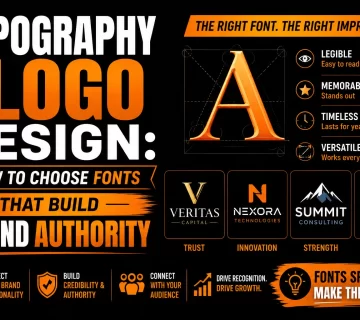
The starting point for any personal brand logo is the name. Unlike company logos where the name may be arbitrary or invented, a personal brand logo works with a fixed asset, the professional’s actual name. The typographic treatment of that name is the primary creative challenge and the primary differentiation opportunity. A personal brand logo that sets the name in a distinctive typeface with intentional letter-spacing, appropriate weight, and considered proportions creates a recognizable, ownable visual treatment that is as distinctive as a separate mark without requiring one.
The Supporting Mark: When and Why to Add One
A supporting mark, an initial, a monogram, or an abstract element that can be used independently of the full name, solves a specific and practical problem for personal brand logos: the need for a compact version usable as a social media profile picture and favicon without the full name. A circular crop of the full name wordmark at social media profile picture scale is typically not legible. An initial or monogram in the same typographic style and color as the full name treatment provides a compact, recognizable icon version without requiring a separately designed mark.
Color and Consistency Across Personal Brand Platforms
A consistent color across all personal brand touchpoints, LinkedIn, Instagram, the website, printed materials, speaking stage slides, is one of the highest-leverage recognition investments available to an individual professional. The color should be uncommon in the professional’s category, should complement the professional’s headshot photography, and should work effectively in both digital and print applications. Personal brand color choices should be tested on a professional headshot background before finalizing, the logo color and the headshot must work together rather than clash.
Frequently Asked Questions About Personal Brand Logo Design
Should a personal brand logo use the person’s name or a separate brand name?
Generally build around the individual’s name, first name and last name or the professional name, as it builds portable personal equity across career changes and platform changes. The exception is when planning to eventually build a business larger than yourself, in which case building equity in a business name from the start is more scalable.
What visual elements make a personal brand logo distinctive without being gimmicky?
Carefully chosen typography with intentional spacing and custom lettering modifications, and a consistent color uncommon in the individual’s category. Avoid literal references to the professional field, lightbulbs for coaches, microphones for speakers, that rarely survive the first year before feeling dated.
How does a personal brand logo differ from a business logo?
It represents an individual rather than an organization, is always used alongside a professional headshot, must scale to social media profile picture size, must feel personal enough for human connection without feeling informal enough to undermine credibility, and must work across a wider range of content contexts.
What are the most important applications for a personal brand logo?
LinkedIn profile and cover image, website header, email signature, social media profiles, business card, speaking stage slides, podcast cover art, and YouTube channel art. The logo must work at 60px circular profile picture scale and at speaking stage screen scale simultaneously.
Should a personal brand logo include a positioning statement?
A positioning statement like “Executive Coach for Healthcare Leaders” can be highly effective when specific and memorable. It becomes a liability when vague, when it limits flexibility as positioning evolves, or when it cannot be omitted in small-scale applications. Ensure the logo works both with and without the tagline.


No comment