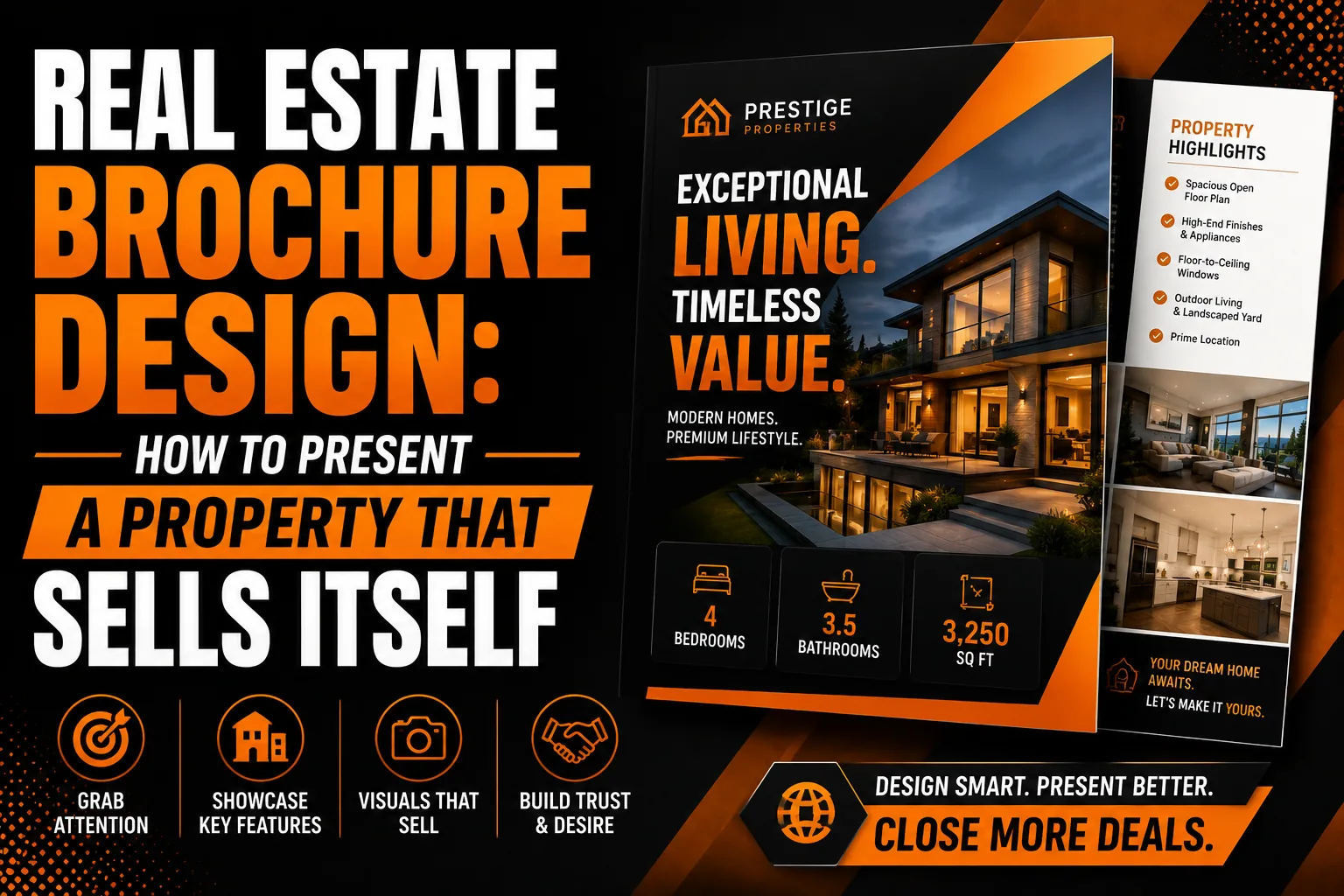
Real Estate Brochure Design: How to Present a Property That Sells Itself
A property brochure is the physical artifact of a real estate marketing campaign. It is what a prospective buyer holds in their hand at an open house, takes home to review with their partner, or passes to their mortgage advisor as they begin the conversation about whether to make an offer. The quality of that physical artifact, the photography, the layout, the paper, the copy, communicates the agent’s level of commitment to selling the property at the best possible price. A brochure that looks like it was assembled in fifteen minutes using a free template tells prospective buyers something about the agent’s priorities. A brochure that looks and feels genuinely premium tells them something very different.
Key takeaways
- Open the brochure with an aspirational lifestyle headline and hero image, and keep the specifications for later pages.
- Select photos for the property’s main lifestyle appeal rather than for the most impressive or recently renovated rooms.
- Place the agent’s branding on the back panel so it stays present and professional without dominating the property.
Lead With the Emotional Promise, Not the Specifications
The most common structural mistake in real estate brochure design is leading with the property specifications, four bedrooms, three bathrooms, 2,400 square feet, built 1987, rather than with the emotional promise the property offers. Specifications are necessary and must appear in the brochure, but they are not what makes a buyer fall in love with a property. The headline and hero image at the top of any real estate brochure should communicate an aspirational lifestyle moment, the light through the kitchen windows on a Sunday morning, the view from the master bedroom terrace, the scale of the living space during a dinner party.
Buyers make purchase decisions emotionally and justify them rationally. The brochure’s job is to trigger the emotional response first, then provide the rational justification in the specifications section. Reversing this sequence, leading with data and supporting with imagery, produces a brochure that informs but does not inspire, and inspiration is what drives viewings, offers, and competitive bidding situations.
Photography Selection: Choosing the Right Six Images
Most standard real estate brochures accommodate between four and eight photographs. Selecting the right images from a professional shoot is as important as the quality of the photography itself. The selection criteria should be: which images best communicate the property’s primary lifestyle appeal, not which rooms are most objectively impressive or most recently renovated.
The hero image should be selected for emotional impact first, the image that makes a prospect say “I want to be there” rather than “That’s a nice room.” For residential properties, this is most often a bright, well-staged living space or a dramatic exterior shot in optimal lighting. For luxury properties, it may be a terrace view, a pool setting, or a feature room that defines the property’s character.
Supporting images should be chosen to answer the questions a prospect will have after seeing the hero image: What is the kitchen like? How big are the bedrooms? What does the outdoor space look like? A selection of six images that answers these questions comprehensively is more effective than eight images that show variations of the same rooms from different angles. Include a floor plan or layout diagram as a non-photographic element, it answers the spatial relationship question that photographs alone cannot address.
Copy: The Art of Evocative Specificity
Real estate brochure copy occupies a narrow range between two failure modes: generic aspiration that says nothing specific (“This stunning property offers luxury living in a sought-after location”) and dry specification repetition that repeats what the data table already communicates (“The kitchen measures 4.2m x 3.8m and features stainless steel appliances”). Effective real estate copy describes what it feels like to live in the property using specific, concrete details that cannot be applied to any other listing.
“Wake to morning light flooding the east-facing master bedroom before descending to a kitchen designed for serious cooking, an integrated induction range, an oversized island for weekend breakfasts, and a view over the garden that makes the walk to the coffee machine worth every step” is specific, evocative, and impossible to plagiarize for a different listing. “The spacious kitchen overlooks the garden and features modern appliances” is generic, accurate, and completely forgettable.
Keep the descriptive copy to 80 to 150 words for a standard residential brochure. Every sentence beyond that is a sentence the prospect does not read. Reserve additional words for the specifications section where completeness is appropriate.
Layout Principles for Maximum Visual Impact
Real estate brochure layout must balance two competing demands: showing the property in the most visually impressive way possible, and communicating all the information a serious prospect needs to evaluate the listing. The layout principles that resolve this tension most effectively are hierarchy, white space, and information grouping.
Hierarchy means that the visual weight of each element corresponds to its importance in the buying decision. The hero image is the largest element on the page. The property headline and price are the largest text elements. The evocative description is a clearly readable secondary size. The specifications are presented in a compact, organized table format that is easy to scan but does not compete visually with the photography.
White space is not wasted space, it is the visual breathing room that makes photography look more impressive and text feel more important. A layout that attempts to fill every square centimeter with content feels busy, stressful, and inconsistent with the premium positioning that most property sellers want to project. Generous margins, spacing between sections, and uncluttered photography presentation communicate quality through restraint.
Agent Branding: Present Without Dominating
Every real estate brochure must include the agent’s contact information, this is how the brochure converts interest into viewings. The agent’s branding should be present, professional, and consistent with their overall brand identity, without dominating the property content. The back panel is the natural location for agent branding: full name, headshot, phone number, email, website, and agency logo. A brief one-line positioning statement, “Specializing in Westside residential properties for over 12 years”, adds credibility context that supports the decision to contact the agent.
Frequently Asked Questions About Real Estate Brochure Design
What should a real estate property brochure include?
A complete property brochure should include a hero photograph, the address and key headline facts (price, bedrooms, bathrooms, square footage), three to five additional interior and exterior photographs, a floor plan, a brief evocative written description, a neighborhood map, key property specifications, and the agent’s photo, name, contact details, and agency logo. The brochure should work as a standalone piece that a prospect can review without prior knowledge of the listing.
What size should a real estate brochure be?
A4 single-sheet is appropriate for standard residential listings. A4 bi-fold works for more detailed or premium listings. A5 single-sheet suits open house handouts where portability is prioritized. For those quick handouts, the principles of a promotional flyer that people actually read apply directly. Luxury properties often use larger formats where generous page area allows photography at a scale that communicates the property’s quality. The format should be proportionate to the property’s price point.
How important is professional photography for a real estate brochure?
Professional photography is the single most important investment in any real estate marketing package. Research consistently shows that listings with professional photography sell faster and at higher prices, with differences of 3 to 11 percent in sale price documented in multiple market studies. A beautifully designed brochure with poor photography will not overcome the credibility damage of images that make rooms appear smaller or darker than they are in person.
Should a real estate brochure focus on the property or the agent?
The primary focus should be the property itself. Agent branding should be present but clearly secondary. A brochure that features the agent’s photo prominently on the front and treats the property as supporting content is an agent marketing piece, not a property marketing piece. Agent branding, photo, name, contact details, agency logo, belongs on the back panel, not competing with the property on primary viewing surfaces.
What paper stock should I use for a luxury real estate brochure?
Luxury real estate brochures should use 200gsm to 350gsm coated silk or matte, with soft-touch laminate on the cover for bi-fold or booklet formats. The physical weight of the paper makes an immediate impression when handed to a prospect. For ultra-luxury listings, uncoated 300gsm to 350gsm natural stock with letterpress or foil details creates a bespoke impression appropriate for buyers who expect every detail to be exceptional.