
Printed or Digital Catalogue: Which Should You Choose?
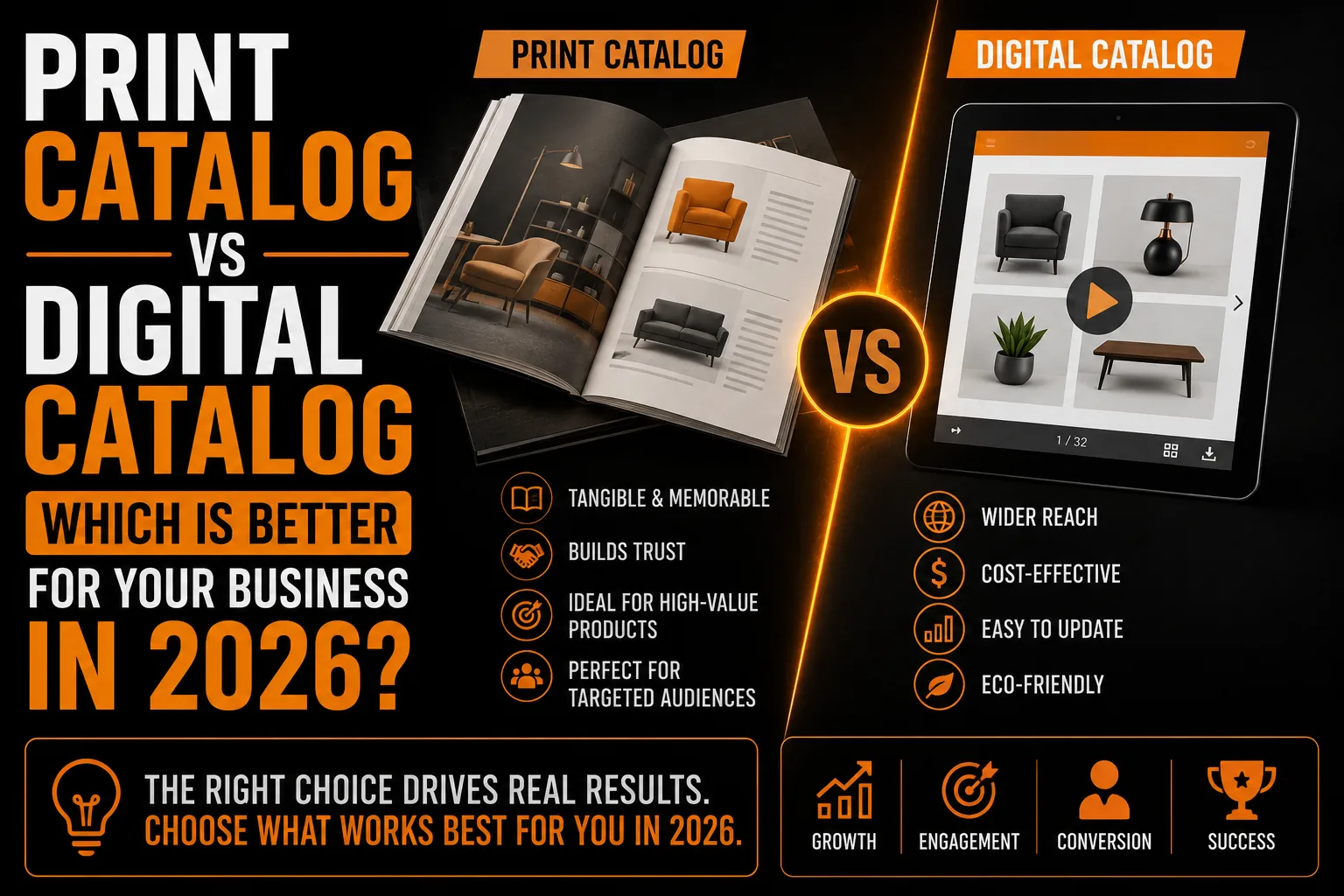
A catalog is still one of the most effective ways to showcase a range of products, but in 2026 you have a real choice to make: print, digital, or a combination of both. Each has genuine strengths, and the right answer depends on your products, your customers and how they buy. A print catalog offers a tangible, premium experience, while a digital one offers reach, interactivity and easy updates. This guide compares the two clearly and helps you choose the approach that fits your business.
Key takeaways
- Print catalogs suit premium, considered products like furniture or jewelry, where a tactile experience adds value.
- Choose digital for fast-changing or price-sensitive ranges, since it updates instantly with no reprinting.
- Weigh the cost per qualified viewer of each format against how often your product range changes.
The Enduring Power of a Print Catalog
Despite the digital shift, print catalogs remain powerful precisely because they are tangible. A physical catalog sits on a desk or coffee table, gets flipped through at leisure, and commands attention without the distractions of a screen. It feels premium and signals that a business is established and serious about its products. For considered purchases and higher-end goods, the tactile, focused experience of print can drive engagement and sales in a way a webpage struggles to match. A well-produced catalog is a lasting brand asset, not a disposable ad.
The Reach and Flexibility of Digital
A digital catalog offers reach and convenience print cannot. It can be shared instantly by email or link, viewed on any device, and updated the moment prices or products change, with no reprinting. Interactive digital catalogs can link directly to product pages and checkout, turning browsing into buying in a click, an approach explored in our article on interactive catalogs and customer engagement. Digital is also trackable, so you can see what customers view. For fast-changing ranges and wide, online audiences, digital is hard to beat on cost and flexibility.
Cost Considerations for Each
Print catalogs carry real per-unit costs: design, printing, paper and distribution, which rise with quality and quantity. That makes them best suited to targeted distribution where each catalog reaches a qualified prospect. Digital catalogs have higher relative design value but negligible distribution cost, so they scale to large audiences cheaply and update for free. Weighing the cost per qualified viewer for each format, against how often your range changes, helps you decide where your budget works hardest.
What Your Products Suggest
Your products often point to the right format. Premium, considered or visually rich products, furniture, jewelry, design goods, benefit from the tactile quality of print that makes them feel valuable. Fast-moving, frequently updated or price-sensitive ranges suit digital, which stays current effortlessly. A complex range that customers need to browse and compare may favor an interactive digital catalog. Matching the format to how your products are chosen and bought is the most reliable way to decide.
Why Many Businesses Use Both
For many businesses, the answer is not either-or. A premium print catalog for key clients and showrooms, paired with an easily updated digital version for wide reach, captures the strengths of both. The print piece makes a strong impression and lasts, while the digital one extends reach and stays current. Designed together from the same brand and assets, they reinforce each other. A combined approach often delivers the best of both worlds, premium impact and broad, flexible reach.
Showcase Your Products With a Great Catalog
We design print and digital catalogs, branded, sharp and built to sell.
See our catalog design service →Why Strong Design Underpins Both
Whether print or digital, a catalog lives or dies on design. Clean layouts, consistent branding and sharp product imagery make a catalog feel professional and make products desirable. Your logo and graphics need to be crisp at any size, which requires clean vector files, the foundation explained in our guide on logo quality at every size. For print especially, properly prepared, print-ready artwork prevents the blurry results described in our article on print-ready files, so your catalog looks as good as your products deserve.
Common Catalog Mistakes
Frequent mistakes include cluttered layouts that bury products, inconsistent branding, low-quality or low-resolution images, and choosing print for a range that changes constantly or digital for products that demand a premium tactile feel. The fix is to match the format to your products and customers, invest in clean, consistent design, and use print-ready files. Done well, a catalog in either format becomes a genuine sales tool rather than an expensive afterthought.
How to Choose Print, Digital or Both
Use these guides to decide the right catalog approach for your business.
- Premium, considered or visually rich products: lean print.
- Fast-changing, price-sensitive or wide online ranges: lean digital.
- Complex ranges to browse and compare: interactive digital.
- Key clients plus broad reach: use both, designed together.
- Invest in clean design and print-ready files for either format.
When you match the format to your products and customers, your catalog sells. A professional catalog design service can produce print, digital or both.
How the Right Catalog Drives Sales
A catalog is not just a list; it is a sales tool, and the right format helps customers move from browsing to buying. A premium print catalog can make products feel desirable and justify higher prices, while an interactive digital one can link straight to checkout and capture impulse purchases. Choosing well means your catalog actively sells rather than sitting unused. Whether your business is in Montreal, across Quebec, throughout Canada or international, a well-chosen, well-designed catalog turns interest into orders, the kind of engagement our article on interactive catalogs explores, and the lasting value our overview of professional design describes.
A Real Scenario: When Print Won the Sale
A furniture maker sends prospects a beautifully printed catalog instead of just a link. Customers leave it on their coffee tables, return to it over days, and come back ready to buy, drawn in by the tactile, premium feel. A competitor relying only on a webpage struggles to hold the same attention. For considered, visually rich purchases, print’s lasting presence can be the deciding factor. The same maker uses a digital version for reach, proving that, designed together, both formats can reinforce each other rather than compete.
What You Receive With Professional Catalog Design
Professional catalog design delivers a clean, branded, sales-focused layout, print-ready for production or optimized for digital and interactivity, built around sharp imagery and your brand. You receive files ready for your printer or for digital distribution. This ensures your catalog showcases your products at their best, part of the lasting quality described in our overview of professional design and vectorization. A well-designed catalog turns browsing into buying.
Frequently Asked Questions
Is a print or digital catalog better today?
It depends on your products and customers. Print offers a tangible, premium experience ideal for considered or visually rich products, while digital offers reach, interactivity and easy updates ideal for fast-changing ranges and wide online audiences. Many businesses use both.
Why are print catalogs still effective?
Because they are tangible. A physical catalog commands focused attention without screen distractions, feels premium, and signals an established business. For considered purchases and higher-end goods, that tactile experience can drive engagement and sales a webpage struggles to match.
What are the advantages of a digital catalog?
Instant sharing, viewing on any device, free updates when products or prices change, direct links to checkout, and trackable engagement. For fast-changing ranges and wide online audiences, digital is hard to beat on cost and flexibility.
Should I use both print and digital?
Often yes. A premium print catalog for key clients and showrooms, paired with an easily updated digital version for wide reach, captures the strengths of both. Designed together from the same brand, they reinforce each other.
What do I receive with professional catalog design?
You receive a clean, branded, sales-focused layout, print-ready for production or optimized for digital and interactivity, built around sharp imagery and your brand, ready for your printer or digital distribution.