
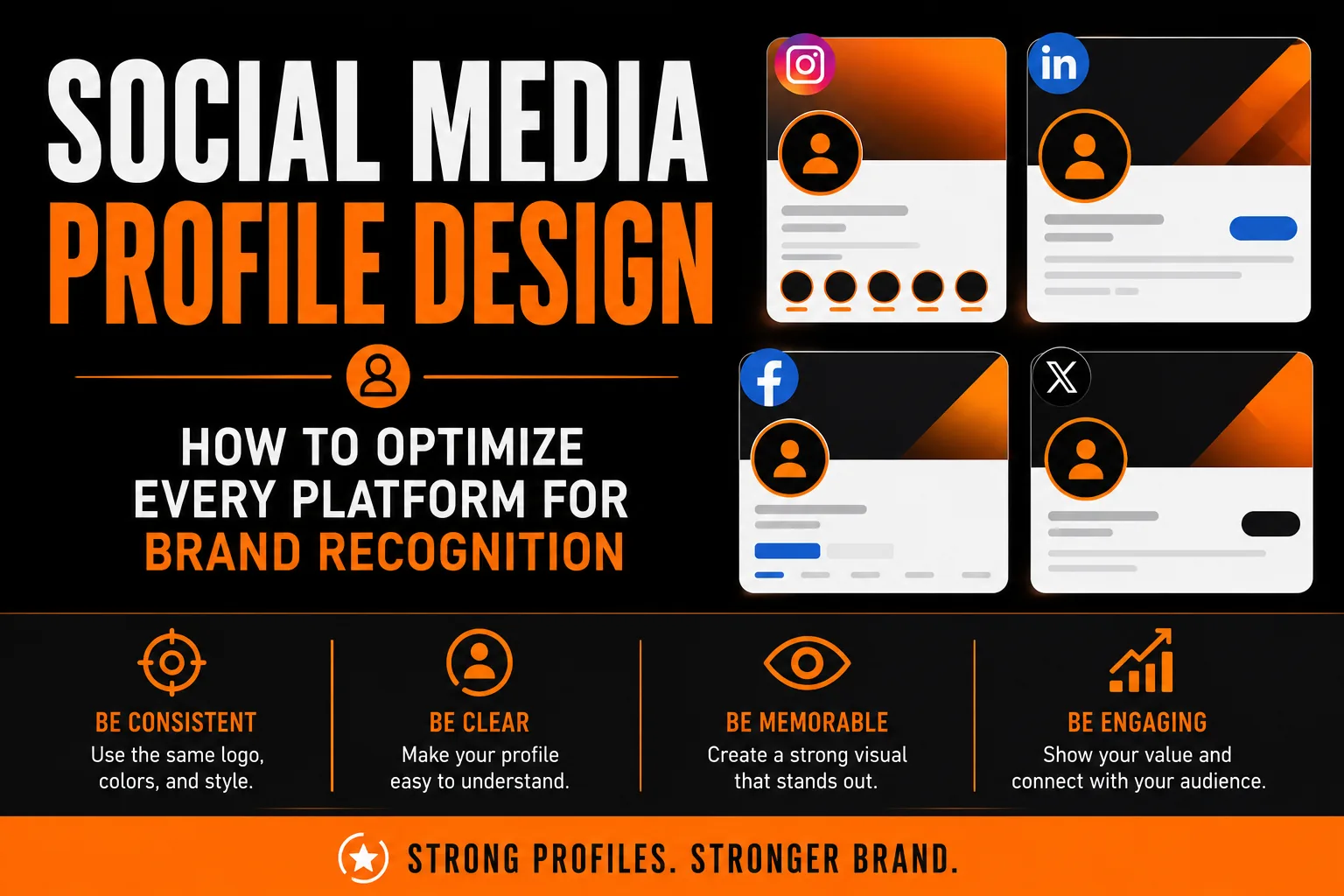
Social Media Profile Design: How to Optimize Every Platform for Brand Recognition
Social media profiles are among the most viewed brand surfaces any business maintains, yet most organizations treat them as administrative setup tasks rather than strategic brand investments. A LinkedIn company page with a blurry profile picture and a generic cover image creates a poor first impression for every prospect who looks up the company after a referral, after receiving a connection request from a team member, or after seeing a post in their feed. Since these impressions accumulate at scale, thousands of profile views per month for active businesses, the compounding effect of an optimized profile versus an unoptimized one is significant.
The Cross-Platform Consistency Principle
The most important principle for social media profile design is cross-platform consistency. A prospect who encounters your brand on LinkedIn, then looks you up on Instagram, then finds your Twitter profile should see a coherent visual identity, the same logo variant in the profile picture, the same brand colors in the cover or header image, and the same general visual style, that reinforces a single, memorable brand impression rather than creating confusion. Cross-platform consistency does not mean identical executions, the different dimensions and contexts of each platform require adapted versions of the same design concept. It means consistent visual vocabulary: the same logo, the same color palette, the same general design aesthetic applied thoughtfully to each platform’s specific format.
Profile Picture Optimization
For business accounts, the logo is almost always the correct choice for profile pictures. The logo builds brand recognition, creates association between the account and all other marketing materials, and is not dependent on any individual who may leave the organization. The specific logo variant used must be the standalone icon or mark, not the full wordmark with the company name. The wordmark becomes completely illegible at the small sizes where profile pictures are displayed in feeds (typically 60px to 110px in diameter), and the circular or square crop clips the edges of wide horizontal logo lockups.
Platform-Specific Guidance
LinkedIn company page profile pictures should be uploaded at 300x300px and display at 60x60px in the feed. The cover image at 1128x191px is the highest-visibility customizable surface on the page. Design specifically for this horizontal panoramic proportion, keeping critical text in the center third where it will be visible on all devices. Instagram profile pictures are displayed in a circular crop at 110px diameter, the icon must be clearly recognizable at this size. The Instagram bio at 150 characters maximum must communicate the brand’s primary value proposition concisely. YouTube channel art at 2560x1440px must account for an extreme range of display sizes from mobile (1546x423px) to television (full resolution), place critical elements in the safe zone of 1235x338px centered in the full canvas.
Frequently Asked Questions About Social Media Profile Design
What image should I use for social media profile pictures?
For business accounts, the logo. For personal brand accounts, a professional headshot. The profile picture should be the same across all platforms for maximum cross-platform recognition.
What are the correct social media image sizes for 2025?
LinkedIn profile: 300x300px, cover: 1128x191px. Facebook profile: 170x170px, cover: 820x312px. Instagram: 320x320px (displayed at 110x110px circular). Twitter/X: 400x400px, header: 1500x500px. YouTube icon: 800x800px, channel art: 2560x1440px. TikTok: 200x200px. Always upload at the largest recommended size.
How do I make my logo visible in a circular profile picture crop?
Use the standalone icon or mark version, not the full wordmark. The icon should fill 65 to 75 percent of the circle with adequate breathing room. Test at the actual display size of 60px to 110px before approving.
Should my cover image be the same across all platforms?
Visually consistent in design concept and colors, but files must differ because each platform uses different dimensions. Create platform-specific versions from the same design concept, adapting the layout to each platform’s proportions.
What should a LinkedIn company page cover image include?
The company name or logo if not visible in the profile picture, a brief value proposition, a relevant visual element, and optionally a current promotion. The LinkedIn cover is the highest-visibility customizable surface on a company page.



No comment